
Meet the Team: Robbie Ladov, General Manager, US Heliports & Vertiports
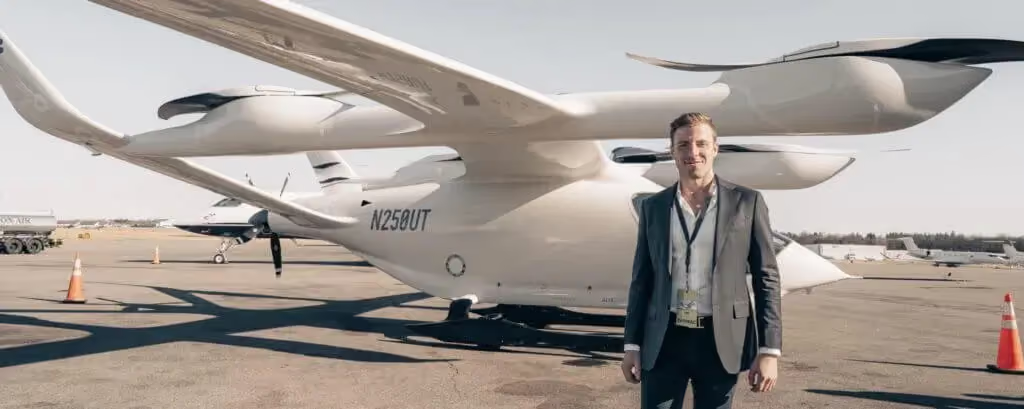
You’re GM for US heliports & vertiports – what are you up to day to day?
Topline I oversee safe, efficient, and commercially successful operations at Downtown Skyport, while also driving future growth across the US. Renovating and modernizing Downtown Skyport has been my main focus for the last year. I was brought on at a strategic time to oversee the transition from the previous operator, who had largely neglected the facility.
Day to day, I oversee all operations, alongside coordinating building upgrades, non-aeronautical uses of the facility, and managing operator relationships. Beyond the operational side, I also lead expansion and business development efforts across the Americas, working with partners, aircraft operators, eVTOL manufacturers, and industry groups to identify new opportunities for Skyports.
Downtown Skyport is the busiest commercial heliport in the world – talk us through a typical day on the ramp.

A typical day at Downtown Skyport starts early. While the heliport officially opens at 8 a.m., our team is usually on site by 7 a.m. — or even earlier if we’re receiving fuel deliveries. The morning begins with perimeter walks, FOD inspections, and fuel quality checks to make sure the airfield is safe and operational before the first aircraft arrive. Early traffic is usually a mix of charter flights, corporate operators, and air taxi commuters traveling in and out of Manhattan. Then at 10 a.m. the air tours start, and that’s when the pace really picks up. On busy days, we can handle more than 200 landings — around 400 aircraft movements total.
We run a lean but highly experienced team, so everyone is cross-trained, including me. If it’s a hot day, I’ll jump in on ramp operations, or take over the radio for a couple of hours to help the team out and keep everything moving safely and efficiently.
You’ve overseen a pretty major overhaul of DTS – what have been the main upgrades?
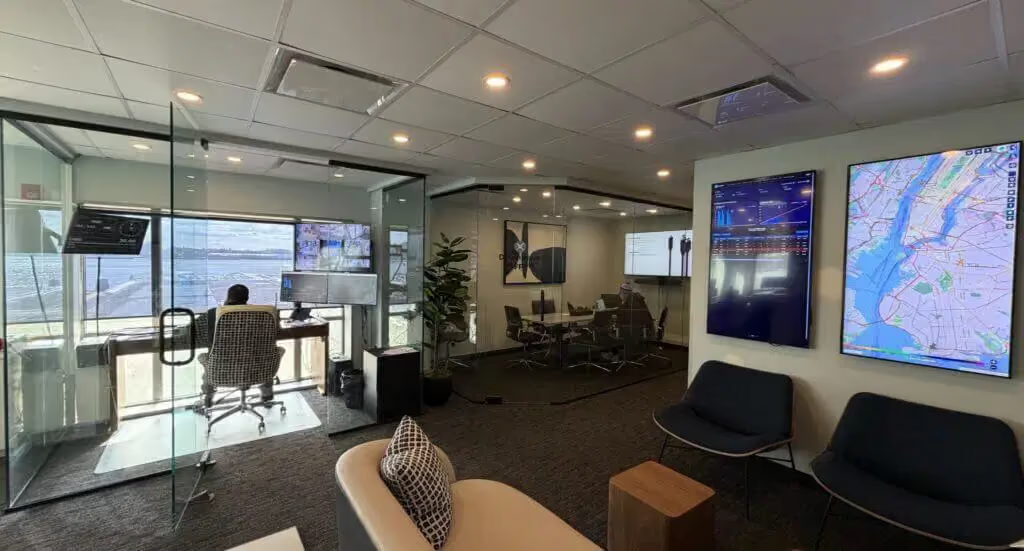
Honestly, when we took over Downtown Skyport, there was a huge amount of work to do. We’ve basically touched every part of the facility at this point! Some of the biggest projects were replacing the roof and drainage, along with major HVAC and sewer system upgrades.
We completely renovated the second floor too, as it was close to uninhabitable — new offices, ceilings, lighting, flooring, restrooms and a brand-new operations center for the team.
On the customer side, we’ve started modernizing the main terminal to improve the passenger experience, adding new glass doors, upgraded lighting, digital screens and wooden panelling on the walls, refinished flooring throughout and an upgraded passenger lounge.
There’s still a lot to do, but it’s night and day compared to how it was a year ago.
What else do we have planned for DTS?
Phase one of our takeover was getting the facility to a state that we were comfortable to operate it at – which I’m happy to say we are now at.
We’re currently in the process of upgrading the airfield lighting to modern standards, as a lot of the lights were the incorrect color, damaged or missing entirely. We have also just approved an entire tarmac resurfacing to be completed in the next few months, which will provide for a clean and fresh landing surface with updated markings to accommodate eVTOL aircraft.
We’re also in the process of upgrading the jet fuel system for traditional rotorcraft. Our operators rely on consistent access to fuel, so it’s critical that we keep the pumps running to their full capability.
Phase two is looking to the future.
The biggest operational upgrade we have in the pipeline is fitting charging infrastructure for eVTOLs. Plans are well underway, and we’re looking to fit both CCS and Joby’s GEACS charging systems, so we’re ready to go once the aircraft are certified. We’re targeting having everything fitted within the next year.
We recently hosted a series of landings for Joby at DTS. How was overseeing the first A-B eVTOL flights to DTS, and how did it differ to traditional heli operations?
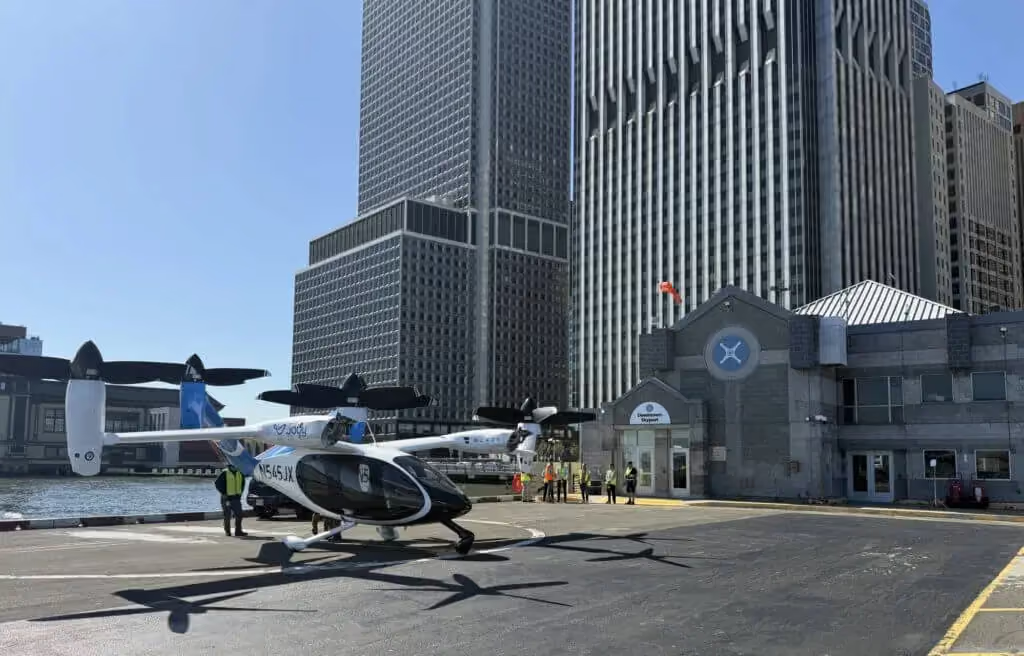
It was an incredibly exciting week for us because it really showed that Advanced Air Mobility is no longer theoretical — it’s here, and Downtown Skyport is ready for it.
One key factor was getting the Joby team familiarized with the airspace – it’s one of the most complicated in the world, so it isn’t just a case of flying in and out. So ahead of the flight campaign I worked closely with them to ensure their operations were successful, and minimised impact on our standard movements.
Operationally, a key factor was accommodating the size of Joby’s aircraft. Compared to a helicopter it’s much larger, as it flies on the wing. So one of the biggest operational considerations was making sure we had the right spacing between Joby’s aircraft and our conventional rotorcraft moving around the airfield.
Charging was another obvious key difference. Each time Joby’s aircraft landed, it touched down on our main TLOF, taxied to its stand, where we then charged the aircraft directly from our grid power — we’re currently the only heliport in Manhattan that can do that.
Overall, the operations integrated smoothly. What was really impressive was that we kept normal operations running each time Joby was with us – at one point we had eight Bell 407s, two Sikorsky S-76s, the Joby S4, and our Speedbird DLV-2 drone all on the ramp at the same time, operating in harmony, safely and efficiently.
This is what really makes Downtown Skyport unique in Manhattan – no other facility is capable of taking eVTOLs, charging the aircraft from grid power, and continuing regular helicopter operations at the same time.
How do you see AAM evolving in the US?
I think there’s a misconception with AAM that helicopters are going to disappear overnight when eVTOLs are certified. There’s going to be a long cohabitation phase where traditional helicopters and eVTOLs operate side by side. In the near term, I think you’ll mainly see eVTOL operations focused around major urban centers with existing aviation infrastructure — places like New York first, and then cities like Miami and Los Angeles as the infrastructure develops.
The key for the industry will be proving the use case and building public confidence. That means focusing on shorter, high-demand routes where passengers can clearly see the time savings and convenience of AAM. Once operators consistently demonstrate safe, reliable operations in those environments, I think adoption will then really start to accelerate.

More from our network
Explore additional perspectives on urban air mobility



Stay informed always
Join our community
Get the latest updates on urban air mobility and Skyports developments