
Meet the Team: Haris Ghori, Regulatory Affairs Manager
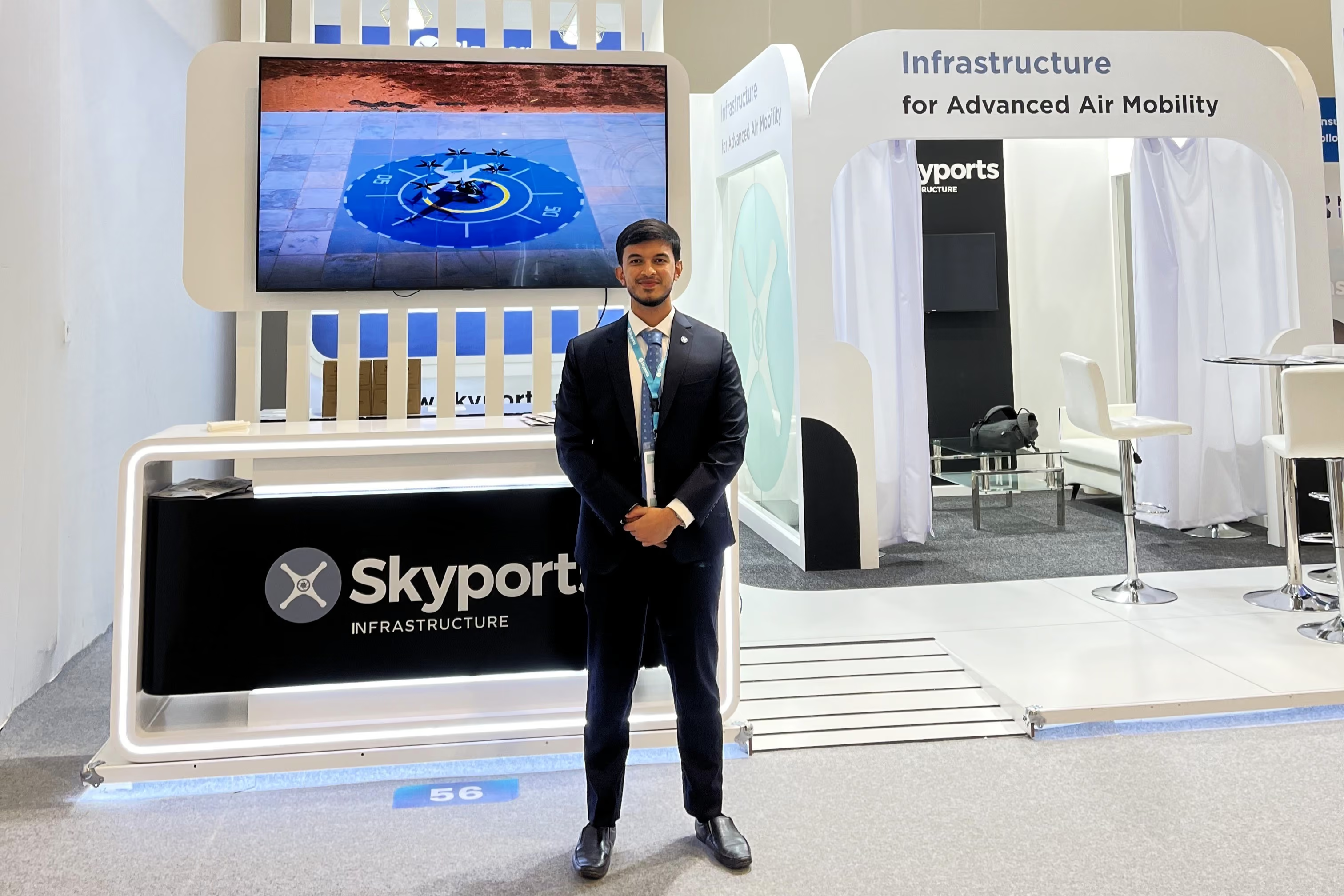
How do you design, build and operate infrastructure for AAM when the rule book hasn't been written yet?
Here we sit down with Haris Ghori, Regulatory Affairs Manager at Skyports, to discuss the critical importance of aviation regulations in our vertiports, and the collaborative approach we took with regulators in the design and build of our newly certified vertiport "VDX" - the first in the world to be certified for commercial eVTOL operations.
So you’re a Regulatory Affairs Manager – what does that mean?
In a nutshell, I make sure that all of our vertiports that we design and build are safe and compliant. Whilst we strive to design and build vertiports that are bold and beautiful, we also need to make sure they are fundamentally fit for purpose as pieces of aviation infrastructure, adhering to the highest standards of safety.
Day to day that means I’m working with aviation authorities, our local partners across the region and aircraft OEMs to ensure what we’re designing and building is right, and then securing all the regulatory approvals that we need for design, construction and operation.
It doesn’t stop at the design and planning stage though – construction is always dynamic, so what's on paper may not follow in reality. If there are any deviations, I’ll be on point to make sure they’re closely managed if there’s a chance it might have an impact on safety or operations.
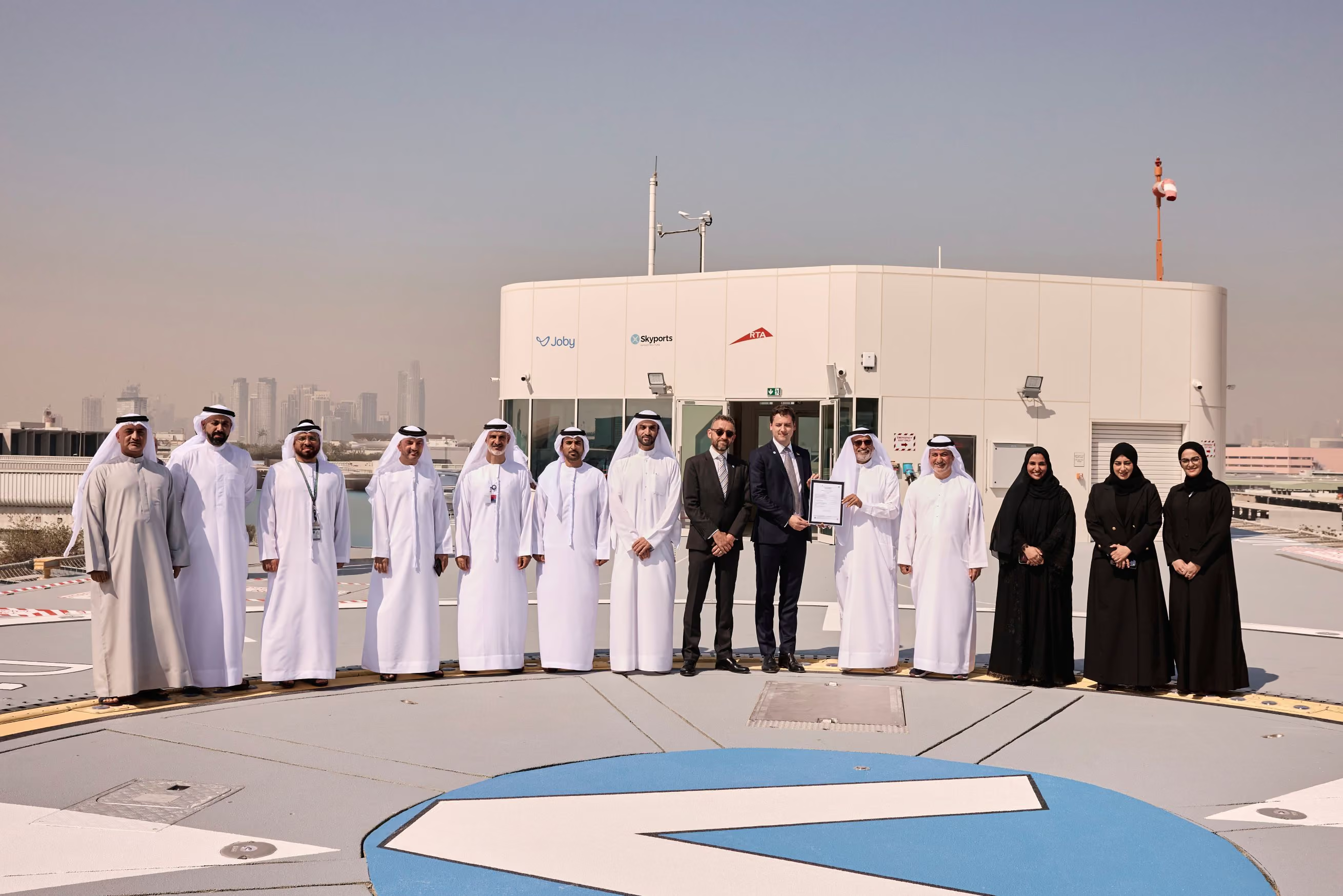
Once construction is complete, I’ll then work on getting the vertiports fully certified for commercial operations so we’re officially ready to fly – like we’ve just done at VDX.
How did you get into aviation regulation, and what drew you to Skyports and Advanced Air Mobility?
Before joining Skyports, I worked as an aviation technical inspector in the offshore sector, where I was responsible for the compliance and oversight of offshore helidecks in the oil and gas sector. It gave me a strong grounding in aviation regulation, safety and operational compliance, but it's also a very mature industry with well-established standards.
What attracted me to Skyports and Advanced Air Mobility was the opportunity to help build something entirely new. Rather than working within an established regulatory framework, I wanted to be part of shaping one.
How do the regulatory requirements for eVTOL operations and vertiports differ from those for conventional helicopters and heliports?
So when you strip it back the core principle is still the same, to provide a landing area which is safe. As such there are standards from heliports that we adopt in our designs.
But there are some unique challenges that come with an electric aircraft – the main one being how battery fires differ to fuel fires from helicopters.
With conventional fuel fires, the objective is to put it out as quickly as possible and smother it. A foam agent is typically used.
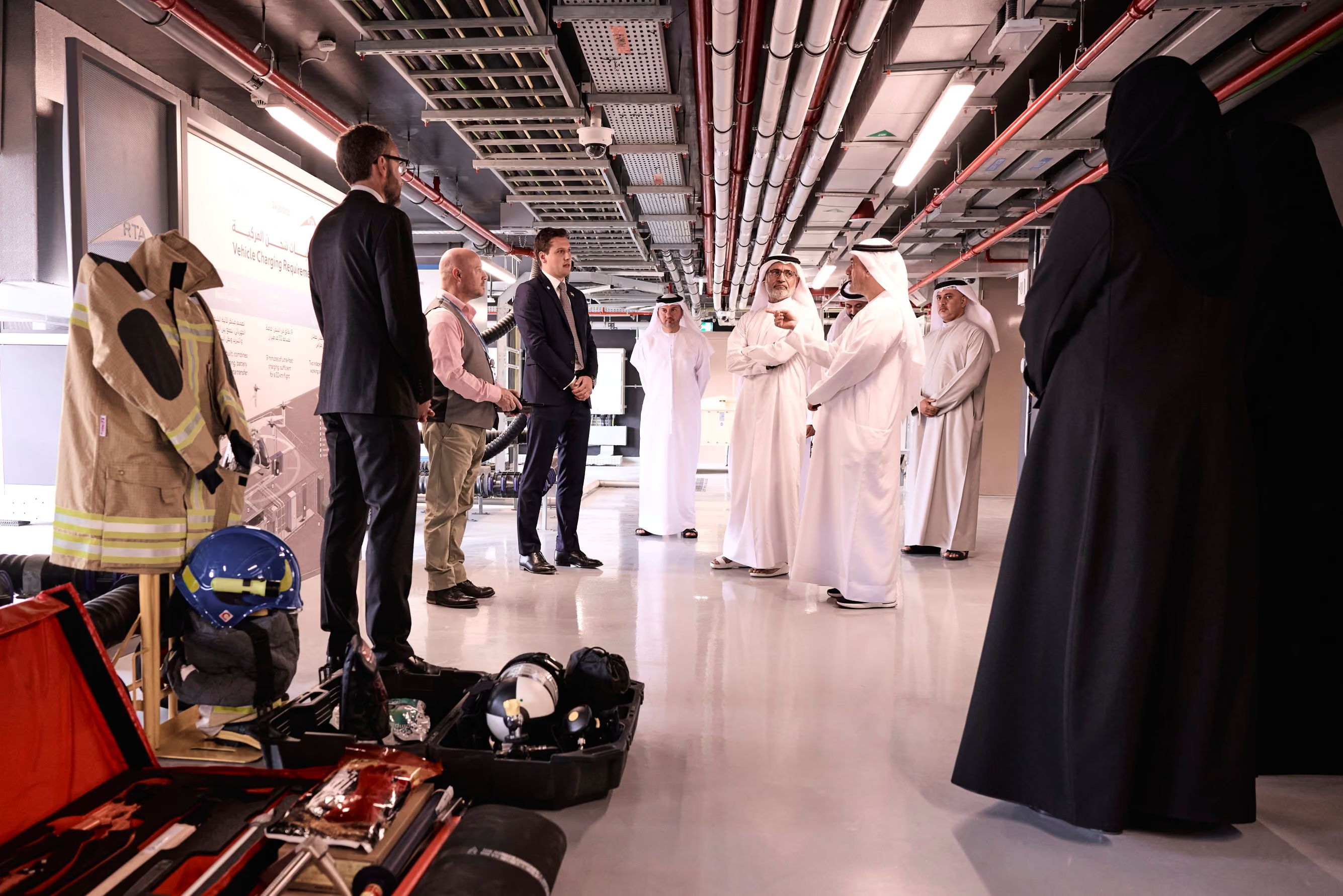
With Lithium ion fires the main risk is thermal runaway, where the heat and fire spreads to the other cells, meaning the fire has the potential to start small and get bigger (and worse). From a regulatory standpoint, that means we need the right equipment, resources and necessary training for our operational staff.
With VDX being the world’s first commercial vertiport, there wasn’t a regulatory framework to follow. Talk us through that journey.
Innovation moves faster than regulation - that's often the challenge with any new technology. What made the difference in Dubai was working with regulators, the GCAA & DCAA, who took a forward-thinking, safety and performance-based approach, rather than waiting for every requirement to be fully defined before progress could be made.
We engaged with the GCAA from the very beginning, collaborating closely as both the vertiport and aircraft requirements evolved. That early collaboration gave us confidence that what we were building would be fit for purpose, and compliant.
That's something we're particularly proud of - certification wasn't something that we achieved from the GCAA, it was something we achieved with the GCAA.
Were there any particular challenges in securing regulatory certification for VDX?
While the vertiport has been developed primarily for eVTOL operations, we also wanted the flexibility to accommodate helicopters, which meant carefully considering the different operational and safety requirements for both.
A good example is the previously mentioned integrated firefighting system, which has been designed to respond to both lithium-ion battery fires and conventional fuel fires using different suppression methods.
Whilst not necessarily a “challenge”, it was something different that we needed to work through. Rather than presenting our solution at the end, we worked closely with the GCAA throughout, sharing our proposed procedures early.
Regulators are increasingly focussing on sustainability. What sustainable initiatives have been incorporated into the planning and development of our vertiports, particularly VDX?
VDX has been designed to support electric aircraft, enabling operations with zero direct emissions. But our approach goes much further than the aircraft themselves.
We've incorporated energy-efficient lighting, selected sustainable materials and finishes, and even ensured our firefighting agents have minimal environmental impact.
We've also looked at how the design itself can reduce energy use – the adjacent car park, for example, is built to naturally promote airflow, reducing the need for mechanical ventilation.
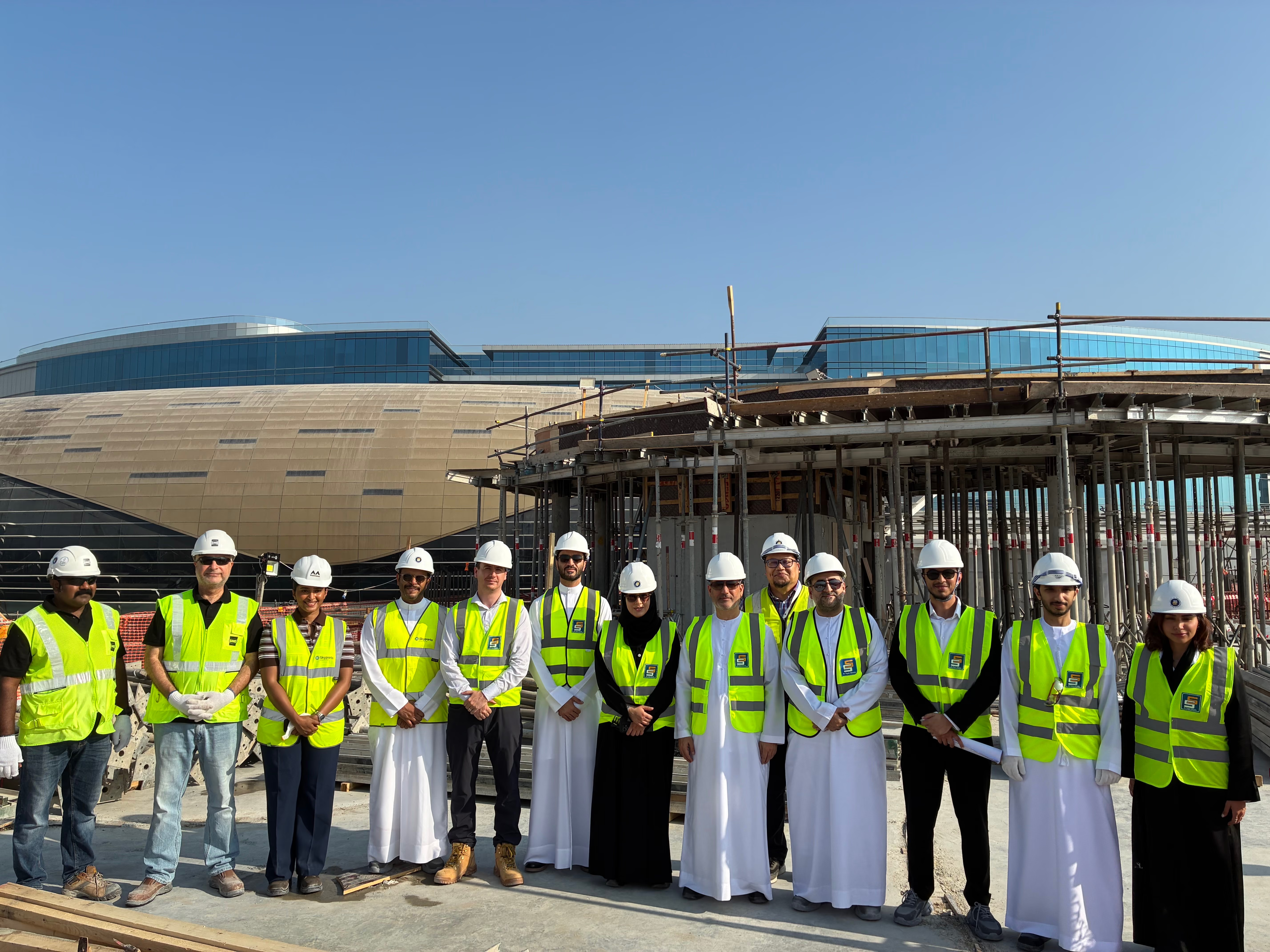
As we expand the network, we're continuing to minimise our physical footprint wherever possible. For example, our Downtown Dubai vertiport is being built on top of an existing structure rather than requiring new ground works, helping to reduce the environmental impact of construction.
How do you expect regulations for eVTOLs and vertiports to evolve over the next five to ten years, and how will it help bring AAM into the mainstream?
What's encouraging is that today's standards have been written with future iterations in mind, recognising that as commercial eVTOL operations begin, we'll learn valuable lessons that can be fed back into regulation.
The most successful regulatory frameworks will continue to be safety and performance-based, enabling innovation rather than slowing it down with overly prescriptive requirements.
As more aircraft enter service, we'll also have access to real operational data on everything from passenger flows to aircraft performance, allowing us to refine vertiport design and operations based on real-world experience.
Close collaboration between industry and regulators will remain essential, and will be key to safely scaling Advanced Air Mobility and making it part of everyday transport.
More from our network
Explore additional perspectives on urban air mobility

Stay informed always
Join our community
Get the latest updates on urban air mobility and Skyports developments