
Meet the team: Akshata Shetty, Launch Lead
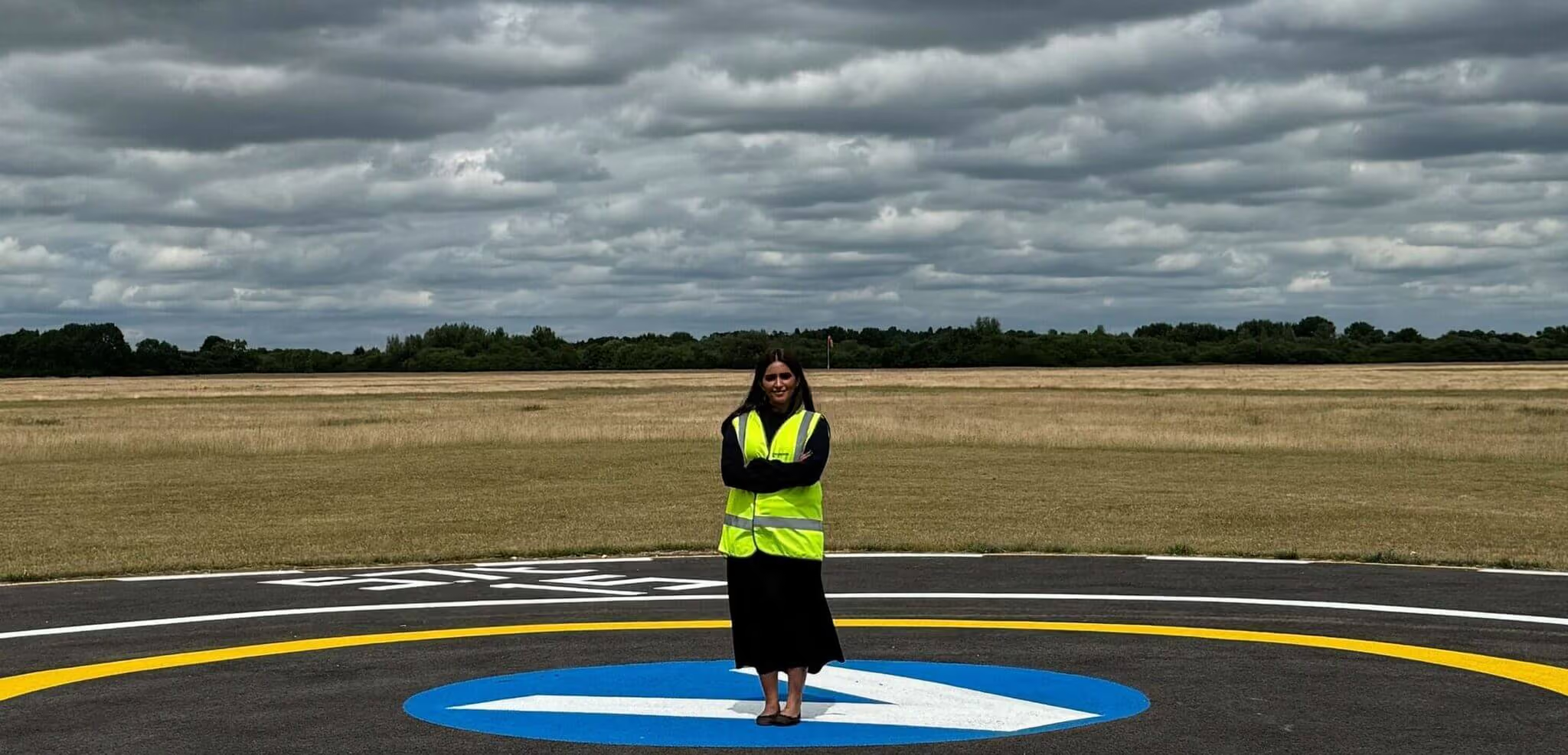
Ever wondered what goes into building and launching the world’s first commercial vertiport network?
Here we catch up with Akshata Shetty, our Dubai Network Launch Lead, to get the low down on what it takes to launch a new class of aviation infrastructure, sitting as the lynch pin between development, regulations and operations.
So you’re Launch Lead for our Dubai Network – talk us through what you get up to day to day.
At a high level, my role is about bringing together all the moving parts needed to launch the network — aligning the development of the infrastructure, coordinating our site partnerships, working with regulatory teams on certification, and ensuring our operations are ready to go once everything’s complete. It also means keeping our stakeholders and partners aligned so their requirements are built in from the start.
A big part of the job is creating structure across multiple workstreams — managing timelines, connecting teams, and handling risks. It’s similar to project management, but goes deeper. I’m not just tracking progress; I’m bridging development and operations – understanding detailed operational needs, approvals, and readiness requirements. Essentially, I’m making sure everything connects — which means becoming a bit of an expert across the board.
How did you get into infrastructure and aviation?
I’ve got a background in civil engineering, which is where my infrastructure experience comes from, and a Master’s in urban planning and environment, which helps me think about how everything fits together within the urban landscape.
Before hitting the workplace I honestly didn’t know much about aviation beyond being a passenger on airplanes! But my first internship project after my Master’s was with an airport in the Middle East, and that’s where it all started. One of my early projects was actually developing an electric aircraft strategy for the airport, so that gave me some early exposure to advanced air mobility.
After about three years in that role, the opportunity to join Skyports came up, and it felt like a natural fit, combining my mix of infrastructure, planning, and aviation experience.
What we’re doing here is pretty new – building the world’s first commercial vertiport network. What do you think is the most unique part about what we’re doing?
What makes this so unique is that we’re not just building infrastructure and handing it over to an operator, like you would with a traditional project. We’re building the vertiports and then creating an entirely new operational ecosystem around them.
That means working with regulators to help shape new rules, collaborating with cities on how vertiports fit within them, defining operating models with partners, and making sure everything we build is compliant, scalable, and future-proof.
My role sits right in the middle of all that — bridging development, regulation, and operations.
What are the key differentiators in this project compared to building traditional aviation infrastructure?
Compared to airports, the biggest difference is speed, scale, and mindset. Traditional airports are built over decades, designed for massive passenger volumes and follow very established processes in development. What we’re building is designed to launch quickly, start small, and scale with demand.
And then there’s location. Airports and heliports typically sit outside city centres. We’re integrating infrastructure right in the centre of dense urban environments, which adds a whole layer of complexity.
Passenger experience is also much more of a focus. With heliports especially, you don’t usually design around comfort or regular repeat visits. With vertiports, we’re thinking from day one about making the journey seamless, comfortable, and enjoyable. Ultimately something you want to come back to.
What has been the most unexpected challenge in developing and launching the Dubai Network?
Understandably there’s hesitation from authorities and landlords in integrating something completely new, in prime locations, when it hasn’t been proven anywhere else yet. People also naturally compare eVTOLs to helicopters — loud, space-heavy, and complex from a safety standpoint. So a big part of the job is explaining how this is different and how it’ll operate in practice.
Perceptions have definitely improved as the facilities near completion and people start to see the aircraft in action, but shifting mindsets has been one of the biggest hurdles.
How does it feel to be working on a “world first”, in building the world’s first commercial vertiport network?
It’s a mix of exciting and daunting. It’s pretty motivating — there’s a real sense of pride knowing that what we build in Dubai is a world first, and could set the benchmark for other cities and future vertiport networks around the world.
That said, it most definitely keeps you on your toes. We’re constantly problem-solving, adapting, and balancing speed with getting things right — all without a real blueprint to follow.
Overall it feels groundbreaking and energising; but it can have its stressful “leap of faith” moments. In some instances we’re figuring it out as we go, and that inevitably brings challenges.
We’re starting with an initial four nodes in the network (which you’re launching!) but the plan is for it to branch further. How do you see your role evolving as the network grows?
Right now, I’m very hands-on with launching the first four nodes. But as our networks develop across the other Emirates — and in other countries — I see my role shifting more toward sharing what we’ve learned and supporting new teams as they roll these new networks out. We’ve already done that on the development side, where requirements are now defined and teams can run with them. Long term, I’d like launch to be the same: a solid playbook that anyone can pick up and use to deliver a successful network rollout.
Skyports is constantly signing new agreements to develop new networks around the world, so I see the lessons we’re learning here meaning we can make future rollouts super streamlined.
More from our network
Explore additional perspectives on urban air mobility

Stay informed always
Join our community
Get the latest updates on urban air mobility and Skyports developments